
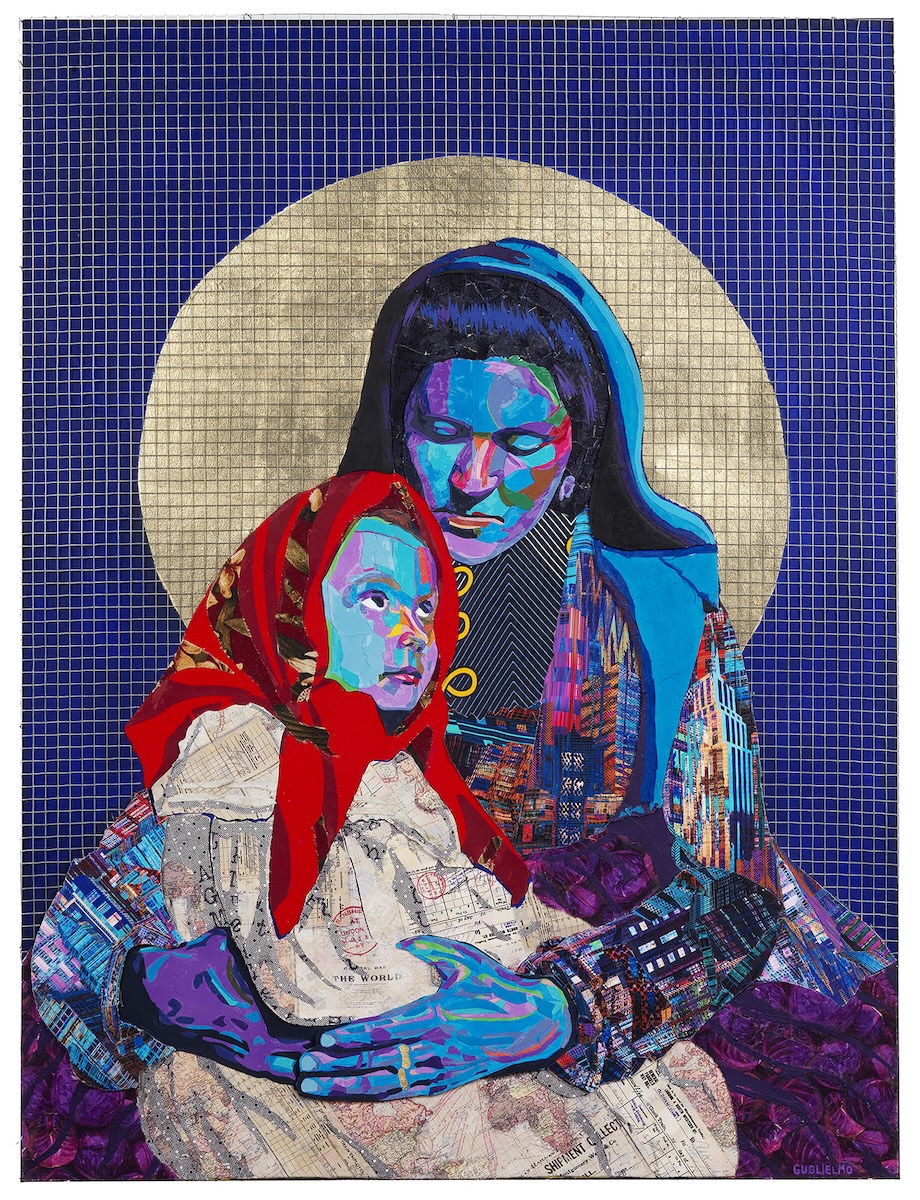
Portraits of My People
I was born and raised in the gritty New York of the 70s and 80s. Hip-hop was my savior, along with Sundays at Grandma’s surrounded by kin. I’d fill up on crumb buns and mouth-watering baked ziti until my belly ached while gifted storytellers spun outrageous tales filling the air with drama and intrigue. At 12, I made my first collages out of cut-up magazine clippings of sports stars and luxury cars, heroes of a scrappy DIY kid. Through my 20s and 30s, I made sonic collages writing rhymes and making beats, sampling, truncating, and reconfiguring existing materials into new compositions.
Fragmentation is still central to my practice. Expanding on my Cuba and Sicily photo-collage work, my current series of life-size deconstructed portraits dig beneath the surface to peel back the layers and get to the core of the human condition, in search of the authentic self. My art is a mirror. It’s the realization of what my mother and grandmother, both artists, longed to do. My subjects are humble, ethnic, down-to-earth, working-class folk like me, still invisible in museums, caricatured in pop culture, and often nameless in the annals of history. These are my people. And I honor them by illuminating their worlds.
Using bright, intense color, gold leaf, cut-up paper, rich fabric, corrugated steel, and acrylic paint, I excavate the essence of a disappearing culture to celebrate its magic and explore the underlying issues that have led to its demise. Overlapping, fractured surfaces mimic the shifting identities Southern Italians have embodied since arriving in the United States as expendable labor, from demonized dark-skinned “other” to violent defenders of whiteness, and everything in between. What were the benefits of assimilation? What were the costs? And while the truth of U.S. history is being banned in schools, I engage Italian American identity to spark greater awareness and deeper conversations about some of the most salient issues of our time. For, as James Baldwin once wrote, “Not everything that is faced can be changed, but nothing can be changed until it is faced.”